

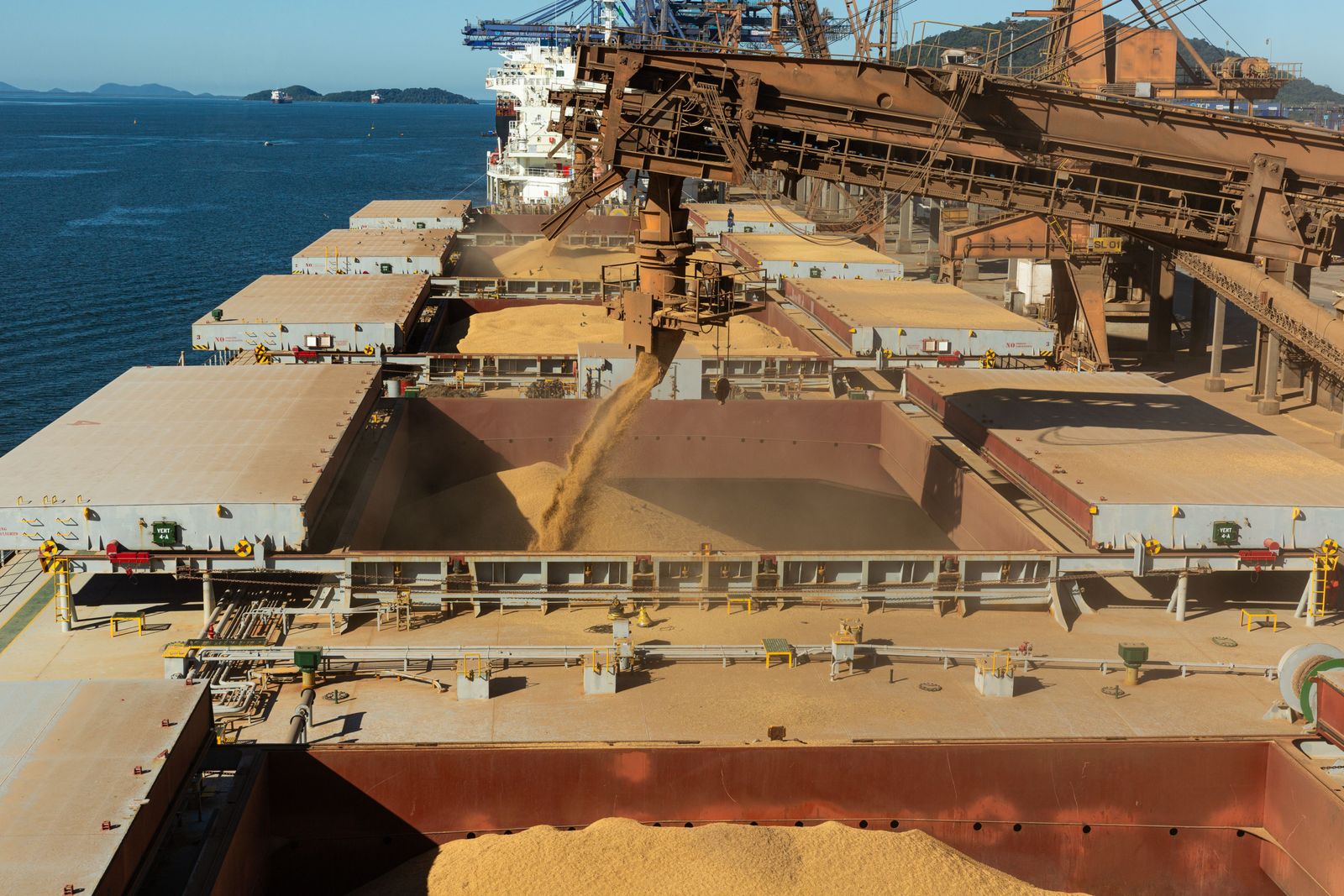
Kazakh flax exports to Belgium collapse amid Baltic transit bottleneck, while Netherlands shipments double
The Grain Union of Kazakhstan has summed up September — the first month of the new 2026/27 marketing year — for the oil flax market: overall exports grew, but the destination mix is shifting markedly. China's share increased, while shipments to several European countries, the Netherlands and Czechia aside, fell. That's according to Yevgeniy Karabanov, head of the Union's analytics committee, as reported by Inbusiness.kz citing his Telegram channel.
Kazakhstan's flax harvest is nearing completion. Although the sown area grew 41.3% in 2026 to 1.904 million hectares, the expected gross harvest is close to last year's level — around 1.35 million tonnes — after a dry summer held back yields in the main growing regions.
According to Kazakhstan's State Revenue Committee customs data, the country exported 100,900 tonnes of flax seed in September, excluding EAEU states — up 33% on August and 1.6 times the same month a year earlier. China took 71% of that volume (71,800 tonnes), 2.7 times more than a year ago. Shipments also grew markedly to Afghanistan (up 2 times, to 13,600 tonnes), Uzbekistan (up 2.2 times, to 6,700 tonnes) and Turkey (up 2 times, to 400 tonnes).
The European picture is mixed. September exports to Belgium fell 5.5 times to 2,300 tonnes, to Poland 1.8 times, and to Germany threefold, while shipments to Italy stopped altogether (versus 500 tonnes a year earlier). At the same time exports to the Netherlands doubled, albeit from a small base, to 200 tonnes, and to Czechia rose 2.7 times, to 800 tonnes. According to Karabanov, the cause is logistics, not demand: after difficulties exporting grain through Azov–Black Sea ports, Russian exporters redirected part of their cargo to Baltic ports, overloading the northwestern Russian rail network and port infrastructure. In October, he said, Russian Railways rejected all transit applications from Kazakh exporters bound for Baltic ports, and the restrictions continue in November. The alternative route via Belarus and Lithuania is more expensive, and as a result European flax prices have been rising for about two and a half months.
Why this matters for Chamber members. The drop in Kazakh exports to Belgium isn't a story about weaker demand for Kazakh raw materials — it's a reminder that trade with Kazakhstan depends on transit infrastructure neither side controls. While the main route into Europe, via Russia to the Baltic, remains unreliable, routes with their own logistics or an alternative corridor stand to gain. That's another argument for the direct port partnership between Antwerp-Bruges and Kazakhstan's Aktau and Kuryk ports, which the two sides are discussing as part of their 2027–2029 cooperation roadmap: such a route would reduce dependence on transit through a third country.
Chamber news by email
Once a week, on Mondays: the latest from the website — Chamber news, events and market reviews.
Related publications
Kazakhstan and the Netherlands discuss energy and rare earth metals at parliamentary level
Kazakhstan and Belgium adopt a 2027–2029 roadmap, with visa-free travel for Benelux from November 1
Kazakhstan and the Netherlands sign agreement in The Hague to expand agricultural cooperation