
Kazakhstan prepares exporters for the EU's carbon border tax: payments could reach €114 million a year
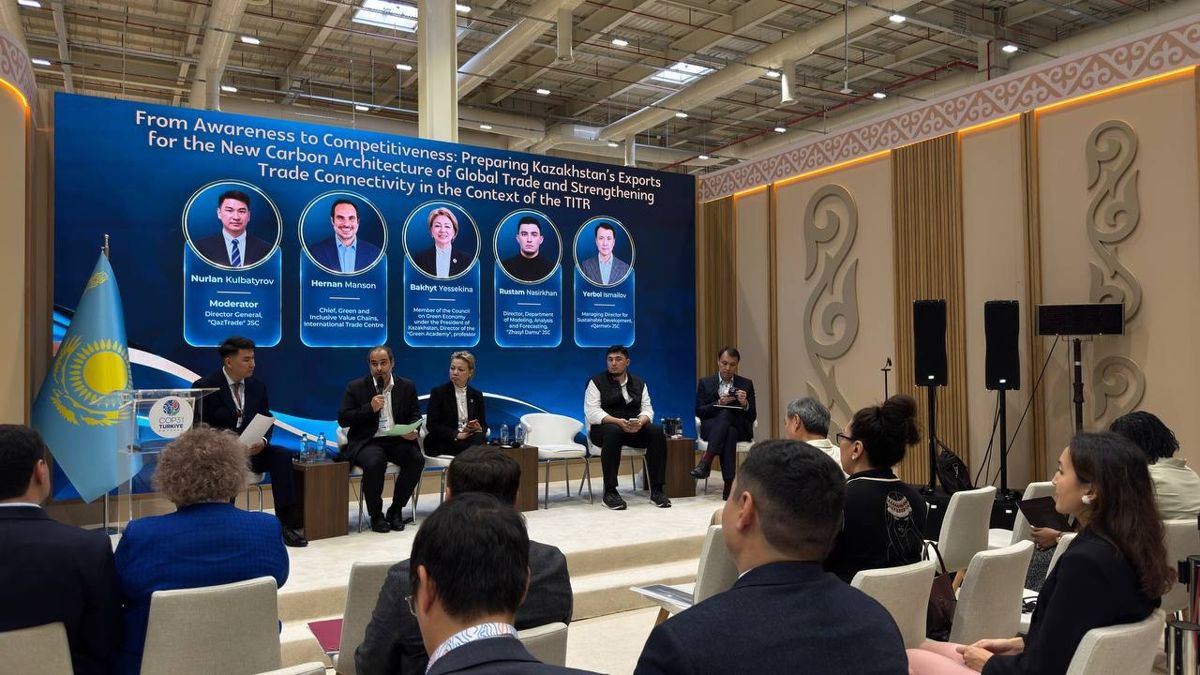
Kazakhstan's Ministry of Trade and Integration and the national export promotion company QazTrade held a special session on preparing Kazakh exporters for the European Union's carbon border adjustment mechanism (CBAM) on the sidelines of the 31st UN Climate Change Conference (COP31) in Turkey, Forbes Kazakhstan reports.
The main phase of CBAM in the EU began in 2026: when importing goods with a high carbon footprint — including steel and metal products, aluminium and fertilisers — into the bloc, importers must pay for the volume of CO₂ emitted during production. If a company cannot confirm its actual emissions, Brussels applies higher default values instead.
Over the first eight months of 2026, Kazakhstan exported goods falling under CBAM requirements worth $4 billion — up 7% year on year. Of that, $317.1 million went to EU countries, mainly aluminium, iron and fertilisers. A joint study by the International Trade Centre (ITC) and QazTrade found that, using default emission values and an estimated carbon price of €80 per tonne, annual payments for just four product categories could reach €114 million — roughly half that, around €57 million, if producers confirm their actual emissions.
Deputy Minister of Trade and Integration Zhanel Kushukova told the session: "It is fundamentally important for us that our producers not only know about the new requirements but are also practically ready for them." According to her, Kazakhstan is building a system for measuring, reporting and independently verifying emissions, which should let companies show European buyers real data instead of default averages. Participants also discussed industrial modernisation and the shift to cleaner technologies as part of preparing Kazakh companies for the new conditions of working with the EU market.
Why this matters for Chamber members. Belgium, the Netherlands and Luxembourg are part of the EU's single market, and CBAM requirements apply to Kazakh metal, aluminium and fertiliser shipments entering through Benelux ports and warehouses just as they would entering any other country in the bloc. For Chamber members who ship, receive or process such cargo, the gap between default and verified emission figures amounts to tens of millions of euros a year in carbon payments across Kazakhstan's exports — a solid argument for setting up emissions verification with Kazakh partners in advance, rather than dealing with extra charges after the goods have already arrived.
Photo: QazTrade press service archive.
Chamber news by email
Once a week, on Mondays: the latest from the website — Chamber news, events and market reviews.
Related publications
Kazakh flax exports to Belgium collapse amid Baltic transit bottleneck, while Netherlands shipments double
Kazakhstan and the Netherlands discuss energy and rare earth metals at parliamentary level
Kazakhstan and Belgium adopt a 2027–2029 roadmap, with visa-free travel for Benelux from November 1